Showing posts with label Mental Health. Show all posts

Thursday, October 10, 2024

My Recovery and Mental Health

Today is World Mental Health Day and this year’s theme is, “Prioritise Mental Health in the Workplace”. The theme seems simple enough, yet when we bring in intersectionality (a key concept in DEI – Diversity, Equity and Inclusion) into the interpretation of the theme to execute it, there are layers that start stacking up. This year and a half have been quite a ride, as I experienced these layers in action through my journey of self-discovery, post recovering from a surgery.

The Accident, Surgery & Post-op recovery

Xray and picture of me post first surgery in May 2023
I do not think I would be able to forget the date of the accident. It was 11 a.m. on a Monday morning 29th May, 2023. My spouse was on a flight enroute to Mumbai for a business trip and I was running a couple of errands on my Activa (a two-wheeler – auto geared scooter). As I was getting off the road, to park my scooter, a speeding bike hit the rear wheel of my scooter. I lost balance and control of my vehicle. Thankfully my vehicle was less than 10km/hr acceleration and one of my legs was on the ground to balance the vehicle. Probably this was a boon in disguise, that the impact pushed the vehicle away from under me to my left, and I kind of staggered a bit to my right, trying to regain my balance. Somewhere in this fraction of a second, I realised that I might end up in trouble if I tried to hold on to the vehicle, so I let it go (all unconsciously), and then I fell on my right, with a twist in my right leg which was on the ground for balancing the vehicle as I was getting ready to stop. Some of these actions I mention, I do not remember from the incident, the doctor and my physiotherapist later explained that this could have been the case as there were no external injuries and there was absolutely no damage to my vehicle. In this moment, my femur (thigh bone) came down hard on my tibia and fibula shattering them into multiple fragments, leading to a complex proximal tibial fracture.

Thankfully a few people from the nearby shops and a passer-by came to my help. The pain was blinding when I tried to, and mind you, this is coming from a person with high pain tolerance. One of them helped me make a phone call to inform my family about my fall and call for help, when I reached the nearby hospital in an ambulance. While I was conscious after the fall, despite the pain, my vision was not. My domestic help came to the rescue as she lived nearby the accident spot. The hospital with the trauma care unit was less than a kilometre away, and the Ortho surgeon was someone whom I had consulted in the past for my family members.

As I was wheeled into the hospital from the ambulance, few family members also arrived to support me. My two children were on their summer break and this news hit them with a shock, especially considering that one parent was travelling and the other parent who was caring for them is in the hospital, and the prognosis of the injury was still unclear. After a 6-hour investigation with X-ray, CT, and MRI, it was determined that I had to undergo a surgery and at the earliest possible time to avoid the small fragments of my broken bones being drifted into the blood stream, which could cause more damage and probably risky for my health.

The surgery happened on 30th May 2024 early morning (5 a.m. IST). I was in the OT for almost 3 hours before being moved to recovery and then an X-ray and then to my room. My spouse and my mom who were outside the city, both came back on Wednesday, 31st May 2024. I was hoping to get discharged by end of the week. And then my vitals become erratic. BP went up the roof. A Cardiologist was also brought in, and thankfully, he insisted that this was normal considering that I have gone through a major surgery. He just instructed the team to check back after 6 months to a year later once my recovery period is almost complete.

Recovering at home post second surgery in June 2023
I was discharged on Monday the next week and with instructions to come in person for a dressing change in a week’s time, when the staplers (yes, my wound was stappled) removal can be decided. In this one week, a nurse would visit me at home every two days to clean the incision wounds and change the dressing. When it was time to visit the hospital, one of the three incision wounds decided to not heal well and I was readmitted for a “minor” intervention of wound cleaning and re-suturing. So, a second visit to the OT, but this time it was for an hour maybe. For a person who went through 2 C-sections without any fear, this experience gave me a sense of fear to the extent of feeling anxiety, even with the thought of having to go back to the hospital for a review for the second surgical incisions & sutures (this time it was sutures the old-fashioned way). Thankfully, this wound healed without any infection, but the regrowth of tissues was very slow. I was given medications to supplement the food recommendations that would help in the regrowth of the bone, muscles tissues, nerves, and skin. All this was the journey in one month – June 2023. I was instructed to be off my feet, until end of August, initially, which got extended till end of September 2023 due to the re-suturing intervention. From October 2023, began my rehabilitation journey, which started with me re-learning to walk. Oh boy! When I think back, the pain sends shivers down my spine even now. Yet, I persevered. I started with partial weight bearing, then full weight bearing exercises, all on flat surfaces. And with the progress I made, and the support from my spouse, I even managed to write my third semester exams for the M.Sc Counselling Psychology that I had started in 2022 in University of Madras.

The Rehab Journey

All through the tough part of my rehab journey, the distraction from wallowing in self-pity and pain were:

  • The support from my family: My mom stepped in to manage the kids and their school, while my spouse stopped all his official travels (which his position & role demand quite often) to stay by my side. Though the children were quite shaken, they were also very understanding and were at my side giving me the comfort and laughter that I needed to recover. My sister-in-law and a family friend were the ones who were there with me in the hospital the day of the accident and the surgery when my spouse and mom were heading back to Chennai.
    Virtual book launch on 17 November 2023

  • Imperfect Parenting: Honest Stories from Global Parents: In August 2022, I had committed to a collaborative book authoring project, which was in the stage of manuscript compilation and editing by June 2023.During my recovery, reviewing the manuscript with my co-lead author Jayne, kept me distracted from the pain and focussed on recovery as I was hoping to go for the book launch. While I did start taking baby steps (again) by November, a virtual book launch happened on November 17, 2023.
  • M.Sc Counselling Psychology Exams: Preparing for the third semester exams, though it wasn’t to the fullest capacity to which I usually do, helped me keep my attention away from feeling despair, frustration & anxiety that seemed to be a frequent visitor in these times. As a menstruating woman, the monthly cycles were another pain point especially September end, when I was instructed to be off my feet.
  • Anticipation to make it to the 25 Years Reunion of my BITS batch (1997): Once I started my rehab journey, the motivation driving efforts were the resolution to make to my batch reunion that was planned in December, in line with the Christmas break. I was also involved in the Yearbook compilation, which was a team effort. And I did make it to the reunion planned at New Delhi & BITS, Pilani campus. This made me understand that when you are extremely focused on achieving something, how your body works to get that done before it breaks for rest & recuperation. The importance of short achievable goals was something I saw work wonders all through my rehabilitation journey.

Third semester exams in October 2023, with walker.
Once I got back from my reunion, the last on my agendas of wish list was, attending my nephew’s wedding in Mumbai in Jan 2024. I saw the conflict between my mind and body in making this trip happen, yet did manage to get it done. Once back from this trip, I started experiencing burnout. Guess my body was giving me signs from a couple of years ago itself. People who know me, would probably agree that I am never seen sitting idle. So from Jan 2024, I started learning to sit and rest. My mind was learning that rest is also productive. This is when I also realised that my 40+ changes were happening along with all the other stuff that was going on. I acknowledged that I had stepped into my perimenopausal phase. I do not know how long this will be, but I do know that with my family history, if I do not give my body (and my mind) the pause it needs, I will probably end up repeating the cycle of hereditary life-style diseases.

Age related changes - Perimenopause

Now, I listen to my body and am trying to establish a routine that includes the continuation of my rehab exercises to strengthen my muscle, ligaments and tendons around my right knee, there by ensuring that posture disruption does not happen as time passes. I have also included some cardio and strength training and Yoga into my routine to deal with overall fitness and reduce my anxiety & stress which seems to be a 40+ perimenopausal symptom than anything else related to conscious or unconscious thoughts in my mind. The reason I say this is because the anxiety is a common occurrence in the week before my menstrual cycle (which also has a reduced duration in comparison to what it used to be in my 30s).

1997 BITS Pilani batch reunion with my walking stick
There are other perimenopausal symptoms that I am experiencing, which I do not want to enlist here for the entire world to know everything about my medical health. Suffice it to say, in the recent times there is enough talk about perimenopause and related symptoms, where it is mentioned that there are close to 100 symptoms that fall under this category but have the risk of being misdiagnosed as there has been no open discussion on this topic until recently.

What I read as part my Abnormal Psychology, under the category differential diagnosis, I have come to experience in reality, specific to my case that not all medical professionals or any other associated professionals (Physiotherapists, Counsellors) make a holistic evaluation before planning on the intervention. In many cases, active listening itself seems lacking, and the professionals rush to diagnosis and intervention based on just a few symptoms or markers. The mitigating circumstances, the chronic stress factor (especially in women and primary care givers, and those belonging to the sandwich generations including men who experience the pressure of sustaining the income as their household might be a single income household), and any other such factors that can contribute to the physical, physiological and mental symptoms that a diagnostic manual might describe.

Even today, a year and a quarter after the accident & surgery, it is a mental project plan for me, if I have to step out of my home to visit family, friends, or go to a mall or movie in a theatre. Any crowded place or navigating in peak traffic (even inside an auto or a cab) brings back the anxiety in full force. There are days I find myself feeling the strong urge to cry out loud. In the last 6 months, I have learned to let the tears flow out without suppressing them as it helps me feel better, less anxious, and less frustrated, there by less angry for the smallest of disruptions (like loud noise on TV or sudden banging of door because my child was excited to go out or the gust of wind unhooked the door from the magnet holding it in place). I openly talk about my vulnerable state to my family members – spouse & children, so that they understand me better and are able to hold a safe space for me to be vulnerable, there by breaking the toxic expectation that as a leader of home I have to stay strong, even if it is costing me my wellbeing.

Definition of Workplace & Mental Health Prioritisation

Coming back to the beginning of this article, specifically about the multiple layers that intersectionality brings in a workplace and the definition of workplace itself before we focus on prioritising mental health in workplaces.

My take on the definition of workplace is, not just the corporate workplaces. For the sandwich generation, home also is a workplace. For SAHM the workplace is home, and the relatives and family members constitute their work force structure (& hierarchy). The workplace culture here differs from the corporate workplace in the sense that there are relationships entwined with emotions, feelings, and sense of entitlement that is difficult to separate from the individuals in this workspace, the gender differences in roles and responsibility which is more implicit and hence unrecognisable, until a conscious effort is made. This creates a lot more complexity when prioritisation of mental health in this space is looked at. It needs a mindset shift starting from the aspect of looking at this space as a workplace, and then re-working on traditional value systems and role definitions, responsibility & load sharing and more.

Top post on Blogchatter
Thank you Blogchatter! 

My effort in sharing my recovery & rehabilitation journey is to highlight these layers that unravel in my non-traditional role. What I have shared gives a mere glimpse at the complexity of this space. I can neither define myself as a traditional Stay-at-home-mom (SAHM) category, nor as a traditional working woman (outside home). Yet, I don both the hats. In addition to this I was and will be a primary care giver to the aged in my family, and I belong to the sandwich generation. And during my recovery, I also donned the student hat as well. I added the published author to my list of roles during my recovery. Finally, I am also a volunteer working towards a chosen cause. I also had to deal with the mom-guilt for scaring my children with my accident. Despite the accident not being my fault, but a chance happening, that could have happened anywhere if it was meant to, this mom-guilt refused to leave for a long time; even now it tries to rear its ugly head once a while. Intersectionality requires us to see all this and more when we cater to the needs of individuals and groups. It is time that we understood the importance of intersectionality in the DEI and in mental health, in fact in holistic wellbeing too. This is important for self-advocacy and speak confidently to the health professionals if we sense that there is a possible mismatch in their understanding of our mitigating circumstances that either exacerbates or interferes with the treatment plan that they chart out for a (mis)diagnosis that they arrived on with partial markers.

I am assuming that I signed up Blogchatter's CauseAChatter programme and this blog is my contribution towards my personal goal for the same. 

Wednesday, October 09, 2024

I Am Not OKAY As Well!


Originally written and published for a prompt on Momspresso platform (which shut down in 2023. Hence creating this article here to address a broken link on this blog)

Since the outbreak of COVID19 virus, the knot feeling in my stomach has become a permanent feature. As a practice, I do not share my thoughts that seem like a rant, till I have processed my emotions completely and am able to address what is the trigger, and how to deal with it to ensure my mental peace and that of my family too. That way, the post I put out there does not add to the overwhelming negativity that is already there in abundance but adds some value either with life lessons that I learned from the exercise or tips on how to deal with such situations, some helpful practical takeaways to those who land up on my page.

The first lockdown in India was in March 2020 and many suffered. I was among the privileged who could afford to stay home, choose to stop following the TV news channels that callously reported in a way to increase the channel TRP rather than focus on empathy and compassion, or project the way to address the issue that they were highlighting. I was grateful that I and my family could hole up indoors till we need our food to be restocked once a week.

The news of migrant workers moving on foot, their images showing their suffering along the way was quite disturbing and painful. I am sure it had the power to even move an unempathetic person into action. With mindfulness as a way of life for me, this incident pushed me to a more conscious zone where my choices were driven with even more care and concern to bring minimalism as a way of life. Giving back to the community also was a part of my everyday life and this only made this resolve to give back with gratitude even stronger, not because we could, but because we should. As part of this resolve, I decided to share my life lessons beyond my family through my writing on various platforms, as well as through a life skills colloquium for teens and young adults. Yet, this did not help to release this “knot feeling” in my stomach.

The First Covid wave peaked and fell. The lockdown lifted and people were back to their old normal. This “knot feeling” became even more profound and uncomfortable. My younger one decided that the mask wasn’t needed anymore when he went to the community playground and thus started my everyday tug of war with him on the importance of COVID protocols. This war did not seem to have an end in sight.

That is when I started hearing statements like:

‘We Indians were immunologically stronger’

‘Humaare DNA mein hi Corona ko baghane ka dum hai’

‘Heat in India can kill us all, then what chance does this virus stand?’

‘Our natural herbs give us natural immunity boosts. No Corona can affect us’

And thus, overconfidence sowed the downfall of all of us. Public behaviour was at its worst. People did not want schools and colleges to open, but they freely moved in throngs to shopping malls, movie theaters, tourist spots, temples, and big political rallies and social events, breaking COVID protocols – no masks and no social distancing and with their children. Starting this January, we had hoards of religious gatherings, political rallies, family functions that were kept on hold for one year in full effect with thousands of people standing and sitting so close that even wind could not have passed, leave alone the virus. Yet, you kept hearing that COVID safety measures were undertaken. The hypocrisy of following double standards of collecting fine for breaking COVID protocols from people who commute to work every day, while letting thousands and lakhs of people throng in one place where you can evidently notice that protocols cannot be followed at all wasn’t lost on many of us.

Online classes for students kept happening as usual as though this is something here to stay. WFH was celebrated as an innovation that helped reduce asset costs for companies. What many failed to notice was, home stopped being a place to unwind and spend quality time with family. It is now a nook office, an online school, and a browsing centre. These lines of differentiation completely vanished. We now started hearing new terminologies like Zoom fatigue, lockdown fatigue, and emotional numbing. Mental health garnered newfound attention.

Vacationing and visiting family & friends started off again as though there was no 2020. The explanation given was to overcome these fatigues, start a new normal by embracing to live with COVID19 as it is here to stay. Vaccine availability gave new hope and along with it a sense of lethargy that we have won COVID. Geographical boundaries that were temporarily closed were opened again with a bit of restriction in place.

That is when all hell broke loose. The second wave that was happening somewhere else in the world now started rearing its head here close to home. Disturbing images of COVID deaths were no more in some distant part of the world, it was very near, just around the corner. What was statistics, now became a name. The blame game began.

While I do not deny the accountability and responsibility of the government in better implementation of COVID protocols and preparation for the second wave when they had the time to do so, the individual responsibility of a common person is not even spoken about.

The recent news of two doctors hitting each other was quite unnerving. The newsreader claimed that this was due to exhaustion which is possible. They have been on the edge since last year. If not for their efforts, we all wouldn’t be able to even have the little bit of hope that there is someone to care for us if we get sick. And what do we do in return, put ourselves in harm's way and increase their load multiple times that they succumb to stress, anxiety, and eventually to COVID and are there no more! Yet, we have the audacity to question the integrity of the doctors but would not speak of our contribution in putting ourselves in harm’s way by participating in the super spreader events.

Picture Curtesy: Canva Template

Oh… my tummy “knot feeling” was having a field day. It decided that it would like to explore the rest of my anatomy as well. My body pain, headache, and a queasy feeling in the stomach were a constant, most days. All my coping mechanisms to deal with emotional ups & downs, anxiety, and stress now only provide temporary relief. I wish I could lock myself in a dark cave where nothing else can exist but, me and myself.

In these uncertain times, no one person can provide a solution or give an answer to this difficult problem that we all are facing. It has to be a collective effort. Unfortunately, we are either busy actively attending to the sick or shouting activism and spreading hate & angst.

No therapy or counselling might be enough. Even mindfulness practices may not be able to help. Mass numbness as a phenomenon is there. Grieving for the departed or the affected isn’t happening at all either because of the sheer number of people who are getting affected or dying, or fear and shock have immobilised other emotions. Even when the thought of those who lost their lives comes, we consciously push it away fearing our personal emotional breakdown.

We fail to realise that such feelings have a way of catching up unawares. Some are crying and breaking down but are not sure why while some do know the reason. And there are some like me who end up ranting all that is going through in their head – another form of breakdown.

Why am I calling all that I have put here as a rant? Because I have no probable solution or comforting words to give to anyone reading (as I usually believe in giving through my writings). I can only hope that somewhere in this rant I have made enough sense for people to take away these things (and maybe more):

  • Find your own method to process emotions.
  • Be cognizant and do your best not to be part of the problem.
  • Try to see if you can be part of the solution, or at least do what you can even if it means staying indoors if you are privileged enough to be able to do that.
  • Be available for your loved one. Technology has made it easy to stay in touch. Make a 5-minute call and speak about nothing or everything or just listen to them vent or you vent out.

It is okay if you are not okay.

It is okay to want to have some downtime. Take a few days off from whatever work/routine you are having. Nothing else is more important than your mental peace and your safety.

I am not okay, and I need my downtime and I am taking it. I have slowed down. I am not bothered anymore about strict routines, adhering to deadlines if they are stressing me out to the brink of palpitations. I have a couple of notebooks to write what comes to my mind. I have become a learner, learning a new language. I am also a facilitator sharing my knowledge, hopeful that in this collaborative effort someone somewhere might come up with a resolution for this pandemic that seems to become worse every time we think we have a read on it.

If you are also not okay, please do acknowledge it. Speak to someone close to you. Call a therapist, counselor, a helpline…. Speak out your mind, vent out, unburden your heaviness to start fresh and tackle what still lies ahead of us.

I first wrote all this down in my notebook from 8-8:45 this morning (And yes I still use a pen and notebook – my favourite mode to write). Coincidence or call it divine intervention, Momspresso comes up with a topic ‘I am not okay’ for today’s challenge, and here I am sharing what I wrote, for all of you to read. Raw with no filters and no clear discerning direction.

Wednesday, July 05, 2023

Book Review - Lost Edges by Salini Vineeth

Disclaimer: There may be a few spoilers and if you would like to read the book without being influenced by the review, please come back here after reading the book.

As reviews started coming in about the book, touching upon mental health and its importance, I decided to order the book. I placed the amazon order on 28 May 2023 and the book was due to be delivered on 30 May 2023. While I was eagerly awaiting to receive my book, Life had a different plan for me though. On 29 May 2023, I was injured in a freak road accident, admitted in the hospital for compound fracture in my right tibia & fibula which resulted in a surgery and put a long road of recovery. The book arrived on 30 May 2023 and my family brought it to the hospital the next day.

I started reading the book during my hospital stay. It helped me navigate through my own emotional journey during my recovery as I was reading about the life journeys of Geetanjali & Ravi. 

The very first chapter caught my attention specifically because of the aspect of how well it dwelled on the internal conundrum of Ravi in the waiting room of a mental health professional and the myriad of irrational thoughts that keep popping in his consciousness asserting the Tamil idiom “மனம் à®’à®°ு குà®°à®™்கு” (Manam oru Kurangu - meaning our mind is a monkey – or more elaborately, our mind jumps around like a monkey with no rhyme or reason). As his mind jumps around, we also a get a glimpse of Geetu (Geetanjali) from his perspective. As the story progresses, it was a pleasure reading the inferences of events from both Ravi & Geetanjali’s perspectives. This is the reality of life. Every incident has multiple perspectives. These perspectives are from the biased views of the specific individuals who view them through their biased lenses that are a result of their lived experiences from childhood that shape their values systems and learning as a result of navigating situations & circumstances.

Amit, the friend who is the first point of contact for Geetanjali to seek out for professional relationship counselling, does justice to both his personal and professional relationship, by making sure that he just serves as a first point of contact guiding them towards the appropriate support systems either of them need and not letting the conflict of interest of the personal relationship cloud over the professional services that he could be providing. The hand off has been dealt very well.

The research for the book for addressing the sensitive topic of mental health care, childhood trauma and its long-lasting impact including the shaping of one’s persona, importance of therapy, the Indian context of the associated taboo & inhibition is evident in the way the plot unfolds. Both the lead characters have their fair share of childhood trauma and experiences that have been instrumental in shaping their coping mechanisms, which travels with them well into adulthood. 

Though Arnav as a character is very short lived in the plot, he still managed to make a place in my mind as I saw him to be an individual with a deeper character who could be largely misunderstood by most, as he does not care to fit into the societal mould of expectations. He is his own master and slave to none. 

I loved how the story ventured into the different relationships & their quality, that each of the lead roles have in their life – parental, sibling, and friends. And in doing so, the plot touches upon the way they perceive every challenge that life throws at them. Without mentioning the technical terms, the plot touches upon temperament, lived experiences, resilience, trauma, PTSD, self-medication (and its harm), and more. 

Kudos to the author, Salini Vineeth, for being verbal about the need for regular follow ups for prescribed medication and its adjustment for better mental health. She also highlights the need for the psychiatric treatment and therapeutic intervention to go hand in hand and overlap with each other for the intervention to be effective for the individual seeking these services and support. 

As a person who has been passionate about human behaviour and its drivers, I have consciously pursued to qualify myself to understand this from a holistic perspective in both educational context as well as in reading up about current research including interdisciplinary research in biology, sociology, & psychology that shed light on the interplay of these fields in driving human behaviour. From this position, I would say the Salini Vineeth has done a fabulous job of bringing the interplay of emotions, relationships, and environment on an individual’s behaviour shaping beautifully. The importance of appropriate support systems and the complexity of its availability in the Indian context is also well highlighted. 

I would recommend that this book be read by mental health professionals too for them to understand the client’s world with its multiple layers and their complex interplay on the client’s cognition, behaviour, and everyday choices. This will enrich the therapeutic intervention for the client, as it will be an approach that is holistic. It might also motivate the therapist/professional to explore & understand areas outside their specific area of expertise, thereby making eclectic intervention a norm in therapeutic strategy! 

Salini Vineeth – also an alumnus like me from BITS, Pilani, has also authored other books: 

  1. Everyday People: Tales of People you know, a collection of short stories. This was the first book that I read. What pulled me to read this was her Tiny Tales. I have been a fan of her writing long before this book because of Tiny Tales. She has a way with words in expressing the layers in the fabric of human emotions and interaction.
  2. Magic Square, a novella. This is on my TBR (To Be Read) list.
  3. Travel Guides for Hampi and Badami.

In addition to the above self-published books, she has also been part of a few anthologies. Her stories have also been published in various magazines. You can find the links to these on her website.

This post is also part of Blogchatter’s #TBRChallenge 2023. This blog is also part of #CauseAChatter challenge, as this book focuses on individual mental health and its long standing impact on relationships through its various characters. 

This is not a sponsored review.

Wednesday, March 30, 2022

Is your Family a Potato or a Banyan?

In the past couple of years, the pandemic lifestyle has removed the private space for adults to have discussions that may become heated, especially when the discussions are about logistics of planning family gatherings, vacations/trips, and functions. Living with each other 24 x 7 with little or no possibility of stepping out of the home for change of environment or company, kind of made us bicker at each other (even heightening the ‘sibling discord’ moving it to a slightly unhealthy level of displeasure) till, we finally realised that mixing a healthy dose of humour into our everyday lives would help.

There were two incidents in the recent months that happened I would like to share with you and hope that there is something you will also be able to take away from these anecdotes for your life and your sanity.

During one such planning discussion that happened on a day when my first born decided to take an off from regular school that resumed recently, I made a statement to move into a different room so spare her the trauma of the two of us arguing.

Illustration by my daughter M
Illustration by @mizumika
My first born (M) remarked, ‘How strongly grounded our family is!’

My spouse (B) said, ‘Grounded and rounded like potato.’

‘No Appa, well grounded and rooted like the banyan’

‘Potato is found under the soil’ said B, and I chipped in, ‘it is tasty, starchy and hence can replace the main staple food of our household, which was rice.’

B continued, ‘It also is representative of what we as a race have become, couch potatoes, enjoying stuff that keeps us constantly in a sitting posture. It can also wither wildfires and storms, unlike a banyan.’

‘We talk so much about how we are like potato but none of us here eat or like mashed potato.’ retorted M.

‘I love it’, in unison chimed I and B, and I continued, ‘While we love potato, in almost all forms of it, we also need to know that eating too much of it would make us feel stuffed and result in farting’.

M, ‘WOW! I am sure no other family would have equated a family staying grounded and connected, to a potato. I was thinking of a banyan tree, when I mentioned our family is strongly grounded, with so many roots that it will not be disturbed or harmed in any kind of storm. Only our family could think so off the charts and bring up a potato and in the context of our family deeply under the ground grounded... like at least 4-6 ft pit in the ground deep… like the other day when Appa went out, and R absent mindedly kept calling out for him, adding to our streak of breaking stereotypes as a family.’

Now B wanted to know what we were talking about. So here is the second incident.

A couple of weeks ago, B stepped out on a weekend morning to run some errands that kept him out for a while. My son (R) hates silence and being alone. He constantly needs company, and his mouth will always be on speaking mode to the one who is sitting beside. This constant conversation drains me out as I need my silence to rebound. My spouse has mastered the art of responding without really listening and not making it too obvious to anyone else but me. In my case, I wouldn’t blame him for getting caught in the act of phasing out, it probably is me who catches it almost immediately. :-D

So that day, B got ready and before stepping out he told R that he will come for lunch at 2 p.m. and that by then R was supposed to finish his classwork and homework from the previous week that were still pending – result of the adjustment period of going back to regular mode of school after 2+ yrs of online school. B left saying bye to everyone personally. R was sitting at his desk upstairs in our duplex home.

For almost 5 minutes, every few seconds, he kept calling out for his father ‘Appa, Appa,…’

The first couple of times I and M tried telling him that Appa had gone out and will be back only at 2 p.m. At one point we both could not stop our laughter at his cuteness, and he felt that we were laughing at him. So, I called him down, gave him a bear hug first and said, ‘We are not laughing at you chellam. We are admiring your cuteness.’

This calmed him a bit. I and M took turns explaining, ‘We also are laughing at how our family has added one more aspect to the streak of breaking stereotypes as a family with this. In most homes, the child almost always calls out to the mom, Amma, Amma, but only in our home the sound we hear is for the father. And when you call out for Appa you sound very cute.’

He joined us in our laughter happily.

A family that laughs together produces enough endorphins that help in strengthening the relationship bonds, in addition to contributing towards personal wellness. Even the most difficult conversations are made easy with humour. I really do hope some day the stereotypes vanish from the face of earth because then there would be more families that embrace the concept of ignoring stereotypes and does only what work for the family.

This blog is part of Blogchatter’s #CauseAChatter challenge, #MentalHealth, #Discrimination.

Sunday, January 16, 2022

Pandemic and Family Wellbeing

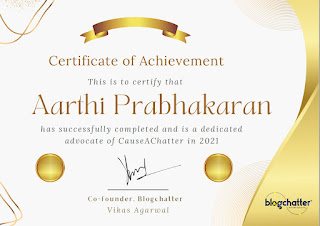
Last year, 2021, I signed up for #CauseAChatter, when I was told by Team Blogchatter that most of my blogs submitted under blogrolls qualify for the same. I stuck with the programme all through the year. Come 2022, January brought with it some great changes and some not so great ones as well. The first great thing was the certificate for being part of the CauseAChatter for 2021.

I have been offered a job in a start-up overseeing their HR operations, which is a huge thing for someone who has had a very non-traditional career path. I also decided that I wanted to pursue Masters (Post Graduation) now, 2+ decades after I completed my undergraduate studies. I was really hoping that the COVID situation will ease out with some semblance of normalcy returning into our lives.

Unfortunately, Omicron seemed to have a different idea altogether. Slowly cases are rising which has brought online schools back in full force. Even the glimmer hope that a form asking parental consent on sending older children to regular offline school just got squashed. 2+ years of online school, work from home (WFH) alternating between with and without domestic help, based on the circumstances, have had their toll on my mental health.

I was curious to know if I was the only one facing burnout and talked to some friends and found that many were going through a similar phase. It got me thinking. Here are some things that I deduced from my discussions with peers and friends on what contributes to this burnout:

  • Stunted Social Life: Restricted movements and the social distancing protocols of COVID appropriate behaviour leaves us all stuck indoors with just our family, and a few friends/neighbours who live close by our place. This is even more so when we are not in a financially privileged position to hire a private transport from our place to someone else’s place far from home.
  • Stunted Vacations: Vacations are the time to unwind. Irrespective of ones’ financial prowess, we would have one family vacation at least every 2 years away from our place of residence to enjoy the few days of change of routines or the lack of it, excitement of exploring a new place (small village or huge city), or just a change of scenery to break the monotony of life. Unfortunately, this hasn’t been possible for obvious reasons.
  • Virtual Workplaces: While there are benefits of virtual workspaces that help in keeping the continuity of work and by extension, business, and economics, it is still not an option for all. Also, the virtual workspace, I think is stunted as well, especially with respect to human interactions as it lacks the decorum that an actual workplace can provide.
  • Stunted Learning for Children: Children thrive with social interactions that involve all their senses. Online learning has them glued to the screens and a chair with no friend close by to snicker or bicker. The attention span that was already very low, to begin with has become almost negligible due to the monotony of the online classrooms.
  • Lack of personal time and space for primary care givers: For homemakers like me who hustle between homemaker and consultant/businesswomen at our convenience (read when the rest of the family is out and about, away from home), the pandemic lifestyle has been the toughest, catering to the demands of the family bringing order among the chaos that COVID brought into the daily routines by completely throwing it off track. Despite the repeated reassurance given by experts that the pandemic will soon move into the endemic mode, the light at the end of the tunnel is still not visible, especially considering the lack of change in human behaviour that is exhibited by leaders and common people alike.

Usually, when I write, I like to make sure that I also give a few pointers on how to address the issue at hand. While I do know I can give some, for the above-stated problem too, I am not sure they are enough to address the problem of burnout that people like me (Indian women, who are the unopposed primary caregivers with no choice to play the role of a secondary caregiver) are going through. And this burnout is not restricted to just people like me. It has affected every individual irrespective of age, gender, economic status and other such associated identifiers. The online space is also not safe enough to discuss our issues and vulnerabilities without a troll or a few dropping in and adding to our already overflowing basket of woes. With such a bleak picture, a deep sigh escapes me more often than usual and I find myself wishing fervently for the end to be near, for everyone's sake.

The need for safe spaces for everyone to be able to share their vulnerabilities, pain points, and frustrations has become a priority. Unfortunately, as a race, we humans have still, not even taken the first step to understanding ourselves and the biases that drive our behaviours and life choices. We are a long way from creating such safe spaces for healthy sharing and the probable start of beneficial discussions that can initiate a change.

I believe that miracles are a result of small intentional actions that would eventually drive a tsunami-like shift in our behavioural patterns, that feels like a miracle. Let us all together pledge to do our share of small intentional actions such as being self-aware, observing what is happening around us, and acting when we see someone in need of a break at least when they ask for it, shifting our focus from excellence to consistent progress (even is student performance – as parents and educators), and more.

Do share your thoughts on what other small intentional actions can bring about the tsunami-like wave that looks like a miracle?

This blog is part of Blogchatter’s #CauseAChatter challenge, #MentalHealth, #Discrimination, #AccessToEducation.

Sunday, December 05, 2021

My Volunteering Journey

My association with Blogchatter started with the team reaching out to me saying that many of my blogrolls submitted qualify for the #CauseAChatter challenge that had just begun in the first quarter for this year. This was in Feb. this year as soon as I joined the platform creating my profile. While this marks my journey as a #CauseAChatter champion, my journey as a volunteer began when I was in 6th Grade at school. The earliest I remember was enrolling myself as a part of Scouts & Guides team. I remember wanting to be part of the National Service Scheme (NSS) during my secondary years, but my new school did not have NSS. 

My blogs are a means for me to share my lived experiences in my life, filled with changes and learning from adapting and dealing with the constant changes that I have gone through as a student (K12 completed in 7 different schools) as well as an adult glomad (resident in 4 countries on 3 continents in a span of 13 years).

This year’s UN theme for International Volunteer Day is Volunteer now for our common future. On this day, this makes a lot of sense for me in my mid-life, I can’t claim that I knew about this as a child or even as a young adult. Yet the warmth I felt, when I volunteered and saw that my time and effort created a positive impact wherever I was able to contribute, was something that I wanted to keep. This is what made me to continue volunteering my time, effort, and skills in every place I resided. Once I settled into the new place, I would seek out the local community centre or NGO through the network of friends that I made in the initial phase and start my volunteering journey working for the cause that I felt at home with, in the local community. 

Over the years, I have faced one question that I have always struggled to answer with conviction, not because I did not believe in volunteering, but because I never really paused to think what was it that always brought me to volunteer my time and effort and not my money that I earn from my profession. There have also been times when I have felt low when peers and juniors (sometimes even seniors) have made statements to the effect that excellent skills were probably not used enough to support myself towards mending/uplifting my career path. 

Thanks to Blogchatter’s question for this International Volunteer Day on what #Unstoppable means to me as a #CauseAChatter Champion, my mind raced down the memory lane to come up with the answer to why I always kept being pulled towards volunteering.

Working for a cause is always measured by the impact that it has created and for me this measure was always important. The purpose of my work, I preferred to measure with the impact that it had/has in the overall schema of things. Most people associate success to a number (either the figure of salary that reached our bank accounts, the ordinal number in the race of life, or the hierarchical position in the career ladder), for me it meant the feeling of contentment for me and if someone else also benefited from my work, then that is the cherry on the cake. Volunteering never failed me in this. 

There are different kinds of volunteering based on what you are willing to volunteer: Financial Aid, Time, Expertise & Effort. All of them are essential components to be able to bring the required impact.

While I know what benefit I gained, the measure of impact that my contribution is some instances are unknown so far, maybe because they were seeds of thought planted to initiate/enable change and I had to relocate from there before I could see the progress of my planted seed.

Blogging (close to 2 decades) here & on Momspresso (for the last 3 years), and answering on Quora (at least the last 3 years) is another voluntary activity that I have had the pleasure of doing. This is my way to leaving behind responsible digital footprints of my lived experience and knowledge gained from these experiences, for the future generations to come, because what you put online, remains there forever.

What is in it for me?

This is one question I have faced time and again from many, despite the higher personal benefit gained from volunteering experience. So here I am listing it out again, hoping that this article will serve as my answer in future the next time I encounter the question.

  • Personal Satisfaction of Serving by impacting: While financial independence may not be there, I get the experience of deciding how the funds, shared by those volunteering funds for causes close their heart, get utilised to positively impact the recipients of the cause.
  • Knowing that my skills are directly being used to impact changes at the grass root level issues and hence will bring a better changed perspective and maybe by extension a better world for our future generations, because I am on the ground working at the grass root level and hence see this impact sooner than most.
  • It also helps me identify the causes at the grass root level to give me a front row seat view of how concepts of social and parental conditions, community groupism drive the group think. So, while solutioning, inclusion comes naturally due to having experienced these things on the field rather than just reading a passive version of it in books in the form of theories.
  • Helps me become a better person because mindfulness becomes a way of life in every role I don as part of a larger group/community. I am aware that the world of opportunities and privileges aren’t the same for everyone, even within the same community and hence the solutions or community level programmes need to be open and flexible enough to accommodate for this kind of variations, is a deeply ingrained lesson from practically experiencing it.
  • The personal detachment also becomes a way of life, while receiving feedback and criticism. Both success and failure are transient, is something that I have learned over the years, and hence the criticisms have started becoming less personal and less trigging. Equally, appreciations bring momentary pleasure, they never get to the additive phase, and I can move on to the next goal or cause that I identify for myself to work for the community wellbeing (that will eventually also cater to my wellbeing).
  • Success and failure are impact based rather than number based, which is a huge change in perspective but very calming for my personal self. I am out of the rat race because I know why I am working and not doing it because everyone aspires success. I also do (aspire for success), but just that my success definition has changed.
  • It allows me to experiment and learn skills outside my expertise and comfort area through online certification courses that contribute to the Continuous Professional Development (CPD) and growth.
  • The freedom to work outside the comfort zone also gives me scope relook at my educational qualification based on the country's acts and regulatory norms before I can narrow down on the right degree to top my current qualifications to continue my personal journey of skilling and qualifying, that would enable me to contribute towards the cause and the community with more relevancy and expertise.
  • Builds my personal and professional network and helps in personal self-care (with a sense of contentment and accomplishment) for the multitude of reasons mentioned above.
While #sustainability and #EnvironmentalTalks invoke the thought of green initiatives and reduce, reuse & recycle, I think the sustainability and environmental talks are incomplete without the impact of the role of volunteering and volunteers in these. On this International Volunteering Day, sharing my continuous tryst with volunteering till now and one that will continue in future also, is my dedication to this year’s theme in urging those of you who happen upon this blog to start volunteering to experience and enjoy what I have, and if you already are a volunteer, then to continue your journey.

This blog is part of Blogchatter’s #CauseAChatter challenge (#EnvironmentalTalks & #MentalHealthTalks) and #CauseAChatter Projects.

You can find all my blogs written for the #CauseAChatter challenge here.

You might also like to read:

Thursday, November 18, 2021

Work-Life Balance or Balancing your Life?

This phrase work-life balance is used to explain the way an individual can and needs to bring a balance between their official work (employed or an entrepreneur) and personal life and thereby regulate the impact on one another. For me, the phrase seemed quite incomprehensible, yet I just could never explain exactly why it was so. When someone asked me that question, my response to it had the answer to the why. I always started my response with the phrase, “My work life and personal life…”. The blog that wrote about this in 2006 is also titled Balancing Work Life and Social Life as opposed to the phrase ‘Work-Life balance’.

Despite this stance, the aha moment for clarity dawned on me when recently I was having a conversation with my Spouse, and he spelled out pretty well what I was probably struggling to clearly state. 

Work is just one part of your life. 

Work is, but one component of our lives, among various other things that constitute our whole life. So how can you have a part of life in a balance with life itself? It logically/realistically can’t. Life is much larger, more like a superset (sometimes I think of it as a universal set) of work. 


With this explanation, for me, “work-life balance” loses its traditional value that work and life itself need to be given equal focus/weightage.

Once this is the perspective, priority, process, and the rest just follow, helping in the long run to practice the calm that's the first step for self-care. While the perception shift sounds easy when explained, really arriving at this mindset takes a lot of effort against generational conditioning and groupthink. 

Here are a few things that can help in reframing our thoughts to develop this healthy outlook. Once we do this, we have a hold on our well-being – mental and physical. 

Define your components of life

Explicitly defining what life means for you and maybe evening writing it down on a piece of paper or drawing a mind map of it. For some, it could just mean predominantly their work, ending up being workaholics and facing the consequences on health that workaholism can lead to. For some others, it could only mean being a part of a socially acceptable marriage institution, ending up losing their self-identity, and seeing them sacrificing their needs as a primary carer of their family.

Let go of Perfectionism

The thought that helps within assisting in this reframing our mindset to remove the focus from work and shift it to the larger image of life is the acceptance that, I am not perfect, nowhere close to being an expert. There's always a scope for us to learn from anyone and anywhere. This provides the grounding needed to accept and work with our failures (even to meet our own expectations from ourselves), in life and work. 

Guilt-free Mindset

Whichever part of the world we are from, human conditioning has a stronghold on self-driven guilt on a lot of things. Understanding the difference between necessary guilt, to ensure not repeating a mistake or a blunder and toxic guilt that cripples us from even functioning normally is a journey each of us needs to travel through self-awareness and self-acceptance.

Honing your Abilities

While the popular belief is that people are born with their abilities, I personally believe that these can be developed by anyone, at any age. An article by Pradeep Sahay on LinkedIn that highlights that the old nature vs nurture absolutist argument is probably ready to be shelved and in its place, a new approach of using context to understand the nature and nurture aspect of talent is a good place to start reading to expand our outlook. There is additional reading within the article that is helpful in adding to our knowledge and learning.

Accepting the Fluidness of Life

My favourite phrase ‘Life throws a curveball when you least expect it’ – repeating this every time in my head during the tough phases of life, helps me tackle them because there is hope that eventually when you practice tacking enough curveballs, the rude shock of the getting sucker-punched by a curveball can one day change to a pleasurable challenge of reeling in a tough situation and growing with the learning from the tackle. This also brings with it the skill of adapting/adopting to change, learning the skills to stay relevant, and growing & changing with the change that is a constant always.

Healthy Routines

When we are on the topic of change, the one thing that can keep us grounded is having healthy routines. Routines help in giving us a soft comfort that helps us deal with the rest of the chaos that is outside our power of control, as it comes. 

Setting boundaries 

Change and routine also bring us to the most important part of healthy regulation – setting healthy boundaries. Working on our conditioning, unconscious biases, understanding ourselves and working on accepting ourselves the way we are before we can start working on what changes we wish to see in ourselves would be a great place to start for setting healthy personal boundaries.

Believing in Relationships

Building relationships (in the workspace and in our personal lives) involves actively engaging in nurturing the relationship and ensuring that the basis of every relationship, trust, remains undeterred. Working on relationships also helps in creating a safety net for us to rely on when we are low on our personal strengths. While the phrase building and believing in a relationship seems simple enough, it is an emotional roller coaster ride and hence requires a lot of work on our personal emotional intelligence.

Social Life

While family and work colleagues are great, they are a given. Having a social life outside these two, building a social circle that includes, friends, causes that are close to our heart, like-minded groups sharing similar thoughts, passion, and interests, needs to be part of our social life for us to gain an enriching life experience.

We are all dispensable (replaceable) in the grand scheme of life, especially with the ‘Change being a constant’ tag line creeping up unannounced. A life well-lived (for me) means, when I am replaced (or dispensed), I have no regrets at all and am content with how I lived my life. 

While these are some of the mindful ways to have a fulfilling life as I see it, most would call these tips to have a great work-life balance. Whatever you would like to call it, these are some of the life hacks that I would stand by to make living life easier and enjoyable, considering that life always has a way to surprise us, when we least expect it. 

This blog is part of Blogchatter’s #CauseAChatter challenge, #MentalHealthTalks.

Saturday, October 09, 2021

Lockdown Chaos: Coping Mechanisms for the Primary Caregivers (Part 2 of 2)

If you would like to read the part 1 the Lockdown Chaos: Coping Mechanisms for the Primary Caregivers (Part 1 of 2), follow the link. 

“No health without mental health” – Surgeon General David Satcher

Here are a few coping mechanisms I practice for my personal mental wellbeing (most involve a mindset shift from what we have been conditioned, a reframing of sorts)

  1. Learn to Pause: We are conditioned to believe that we must always be engaged and contributing something. Doing nothing, is not equivalent to wasting precious time. Sometimes we need that pause of doing nothing to rejuvenate ourselves and our overworked mental and physical system. Even a supercomputer needs to be shutdown to keep it working well for long.

  2. Read Different Genres: I enjoy reading (anything). I love to explore different genres and different authors. I may not read to the extent of quoting the author with the phrase or passage, but now we have the luxury or searching for the same before we share it on the digital platforms. I love to read to explore unexplored territories to widen my thoughts and diversify my thinking pattern.

  3. Create Something From Scratch: I love counted cross stitch and writing. My go-to comforter is one of these two and I am always pulled into it so deeply that the needed distance from whatever is bothering my mental wellbeing is automatically created. This enables me to clearly look into it from afar and then find a way to tackle it to bring back my mental peace. The last year+ saw the conceptualisation of a memoire book on my father-in-law. What started as a digitisation effort of his written work from more than 3-4 decades ago, as it progressed the book had snippets from significant people about him and his positive influence in their lives. The process of conceptualising and shaping such a creation kept me grounded during the pandemic times stuck indoors. The coordination of getting input from people living in different parts of the state and compiling it to a complete book was cathartic. Seeing the book published and released on 31st August 2021 (on his 75th Birth anniversary) in his memory gave a sense of accomplishment.

    The whole effort also seemed like a cathartic closure for the family dealing with the grief of his passing (a decade ago). In 2019, I did a similar effort of compiling the devotional songs of my paternal grandmother in a book format to be given as memorabilia for the family on her first death anniversary.

  4. A Good Sleep: Earlier I used to think that sleeping without solving a fight or a problem is not good for the relationship or self. Now I have come to realise that ‘sleep over a problem’ was told by someone who knew what they meant. When you sleep your body and mind are well rested. Sometimes your dreams could be a way of finding innovative, interesting, and simple solutions to the problem that you had before you slept. There have been extensive studies on this. Here are a couple of articles that has scientific data to support this need.
  5. Pick your Partner-in-crime’s brain: This could be anyone from your sibling, spouse, cousin, friend, work colleague, parent, teacher, or a counsellor who is a good listener and ideator, who understands inclusivity and knows to compassionately look at things from your point of view and then come up with perspectives that would make us think differently from what we had assumed. I read somewhere a quote on assumption – When you ‘assume’ you make an Ass of U and Me. This stuck with me forever. Now, every single time I move into the zone of assuming that I know what goes in someone else’s mind or what they might be feeling, this quote pops into my head and there ends my assumptions. I find that it is easier to clarify what we are thinking to be true or not by openly paraphrasing it without being judgmental when we articulate our thoughts. Doing so also helps in enriching the said relationship and increases our personal score on the integrity index!

  6. Free yourselves from expectations: Everyone has expectations – we from others and others from us. Yet many of us want and wish to be free of it. This takes conscious effort, but it is worth the effort. When you free yourself from expectations, there are no disappointments. Here is something that can help you see how expectations are formed. When you are able to see that, you will figure out your own way to break free of it.

    My 100 word story published on Momspresso
    My 100 word story first published on Momspresso

  7. Solocation: Try going on a solocation, when possible. It really does wonders to self-care. Sometime in March I decided to go on a solocation, just to get away from the daily churn of things and came back after a relaxed couple of days and much more happier than how I left. My family also seemed to have benefited from my 2 days of absence.

  8. Seek Professional Support: While the above do help, there might be instances where they may not be enough. In such situations, there is always an option to seek professional help through personal/relationship/parenting counselling as the need is and ensure that your (above) efforts also have a backing of the scientific process that would fit your lifestyle, temperament, family & individual needs, and abilities. Make sure that you are seeking the right kind of professional support and not just getting some random advice from friendly neighbour, family member, or well-wisher who might not completely understand all the variables that need to be addressed in a specific manner for you and your loved ones to benefit from the same. 

Were(Are) you a primary caregiver & have similar or other coping mechanisms? Would love to hear about it from you.

This blog is part of Blogchatter’s #CauseAChatter challenge - #GenderTalks and #MentalHealthTalks.

Sunday, September 26, 2021

Eco-mindfulness through Home Gardening

Being an ardent plant enthusiast & advocate of responsible living, in my perspective, the word Sustainability always brings up the twin word Mindfulness. Home Gardening (now taking shape as ‘Terrace Gardening’ or ‘Urban Farming’) has emerged as one such mindful hobby, that also contributes to sustainability in more than one way. As the pandemic added to the woes, my home garden was a blessing to help balance my health (mental, physical, and emotional), while keeping my sustainability goals. Happy to share the benefits I and my family reaped and pictures of my Green Hobby over the years!

Natural Stressbuster 
Blooms from my garden over a decade including Tulips & daffodils

When you are stressed in your daily chores, I have heard many say that taking a quick walk bare foot on Earth and feeling the soil/grass, gives us a much-needed grounding to bounce back. Based on my personal experience, this statement is certainly true. When I am in my home garden, working on the preparation of the soil bed, and caring for the plants (with trimming, weeding and such activities), I lose myself among the calmness of Mother Nature and revel in its beauty and wonder. The green of the garden (among the rest of the colours) is also pleasing to the eyes & mind and has the capacity to calm every other raging emotions. The cool touch of wet earth/grass on my bare foot makes me want to take a deep breath that sends me a message of affirmation that everything is okay, and my Earth will keep me company all my life and embrace me beyond, eliminating the feeling of loneliness.

Also, when we have blooming flowers in our garden (specifically Tulips while in the US, Dahlia, Roses and others), the beauty of the different colours of bloom was like the garden was smiling at us. Never failed to bring a smile to our faces whatever we were feeling till that instant. 

Exhilaration of Creating

The same activities of making the garden bed and caring for the seeds/saplings sown that ground me also give me a high with a sense of exhilaration when I see the shrub/herb/tree flower, laden with fruits of labour and care. Makes me feel that I have done my job as a carer right for the ground and plant flourish. It is the same feeling of seeing your child grow and achieve. This plant/tree is in a sense my child as well. 

Good Health

My Home Garden Today
When your home garden also bears vegetables and fruits, you enjoy the garden to fork experience that enables you to know that the food that you eat has been organically grown. There is also a sense of pride that this food was my effort from start (sowing it to start with) till the end (arriving as the edible dish that adorns the dining table). This also weighs much lesser on the expense pattern of the family as the monetary cost incurred in much less in comparison to a store-bought yield. 

Gardening is the best combination of physical, mental, and emotional workout that you can ever have in one single activity. 

By staying outdoors, you are absorbing natural source of Vitamin D (directly from the Sun) that helps in strengthening of bones & immune system. This also benefits weight loss as per some and helps in reducing depression. Depending on the geographical location, make sure that you step out in the right kind of sun to benefit from it.  

The physical activities that you would involve in while gardening in activities like, prepping the garden bed, sowing, weeding, watering, trimming, cleaning debris & getting rid of pests, and finally reaping the fruits of this labour also helps in physical fitness and weight reduction as different parts of your body (and hence different muscles) are used. 

It can also be a family bonding activity that enhances the emotional connectedness of the family members, especially with the younger ones. While doing so, it also serves as a tool of destressing thereby bringing a holistic wellbeing for the entire family and understanding the science behind it. The same can be the case for an entire community, when you have an option for a Community Garden.

A Sense of Agency & Empowerment

Vegetable Patches Over the years

With all the above health benefits, it translates to a hidden reduction in the cost of maintaining the personal wellbeing through not just procurement costs but also through health care and hospitalisation cost being nullified in many cases, including the most seen one of Vit D deficiency that is to be repaired with the help of medicinal/serum supplements.

If you are maintaining a Community Farm (or your friends doing some organic farming ventures in their part-time), it can cater to the needs of the local community and more, by bringing in an additional source of income when you can find the buyers for your produce through your community network. When we can showcase these benefits, we inspire more people in our sustainability journey.

Sustainability begins at home

In school I remember reading about the topsoil erosion and its impact on climate and environment. The easiest way to stop this is by growing grass native to our locality was the solution given in the textbook. Home garden is also a way by which every individual can contribute towards ending the topsoil erosion, maintain balance in water cycle (again a middle school concept), thereby positively impacting the climate change and leading to a more sustainable way of live for our next generations to survive on our planet earth.

There are a lot more benefits than what I have listed above in having a home garden. Do share your take on the same in the comments.

This blog is part of Blogchatter’s #CauseAChatter challenge - #EnvironmentalTalks and #MentalHealthTalks.